
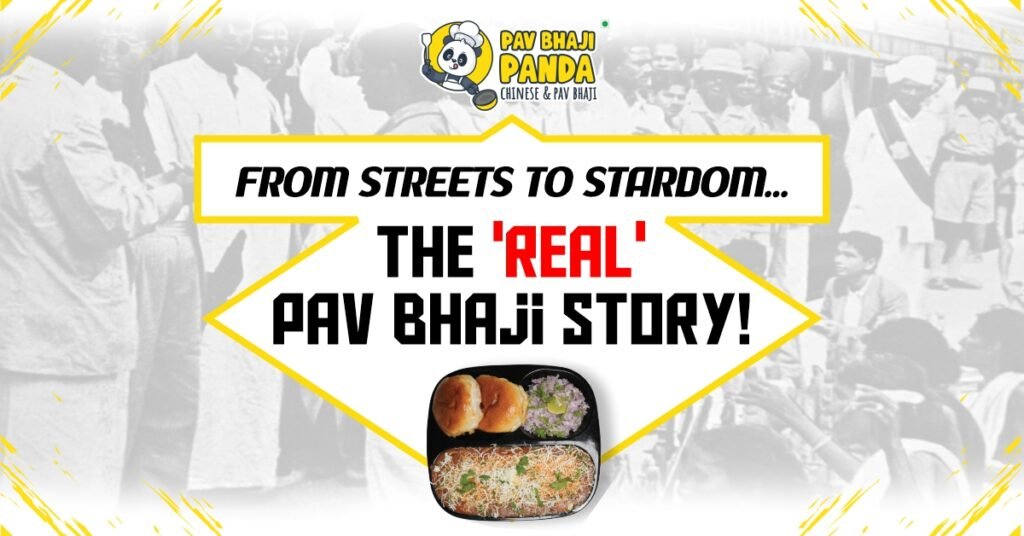
Imagine a dish that’s been fueling India’s busiest city for over a century. A flavor bomb that’s a testament to Mumbai’s cultural melting pot. Say hello to Pav Bhaji, the street food sensation that’s captured hearts and taste buds!
Let’s take a journey through the fascinating history of Pav Bhaji!
Pav Bhaji is a popular Indian street food that originated in Mumbai, Maharashtra, in the 1850s.
Origin :
Pav Bhaji was created by street food vendors, known as “bhajiwallas,” who catered to the textile mill workers in Mumbai’s industrial areas. The dish was designed to be a quick, affordable, and nutritious meal for the workers.
Initial Ingredients :
The original Pav Bhaji consisted of a mixture of leftover vegetables, such as potatoes, carrots, and peas, cooked with onions, garlic, ginger, and spices. The mixture was served with a slice of bread, known as “pav,” which was used to scoop up the vegetable mixture.
Pav Bhaji gained popularity in the 1960s and 1970s, as street food vendors began to sell the dish at beaches, markets, and street corners. The dish became a staple at Mumbai’s famous beaches, like Juhu and Chowpatty, where vendors would serve Pav Bhaji in small, steaming hot plates.
Over time, Pav Bhaji underwent a transformation, influenced by various cuisines and cultures. The dish absorbed flavors and ingredients from Gujarati, Maharashtrian, and Parsi cuisines, making it a unique blend of spices, textures, and tastes.
Today, Pav Bhaji is devoured at beaches, markets, and street corners. From humble vendors to high-end restaurants, this beloved dish remains a staple. Its accessibility and affordability make it a favorite among all.